The Question Every Budget-Conscious Buyer Eventually Asks
With entry-level pricing still a challenge for a lot of Austin buyers, fixer-uppers come up constantly as a potential workaround. The honest answer is: it depends heavily on your specific numbers, your timeline, and your tolerance for the process, not just the discount on the sticker price.
Here's the real math and the real considerations.
Why Fixer-Uppers Look Appealing Right Now
Homes needing work typically sell below comparable move-in-ready properties, sometimes significantly. In a market where 51 percent of Austin listings have taken at least one price reduction, sellers of homes needing work are often even more motivated to negotiate, since their buyer pool is naturally smaller.
This creates a real opportunity for buyers willing to take on renovation, assuming the math actually works out favorably once repair costs are factored in.
The Math That Actually Matters
The key comparison isn't fixer-upper price versus move-in-ready price. It's total cost, purchase price plus renovation, versus the value of a comparable move-in-ready home once the work is done.
Example scenario:
Move-in-ready comparable home: $475,000
Fixer-upper listing: $390,000
Difference on paper: $85,000
But if renovation costs run $95,000 for the updates needed to bring it to comparable condition, you've actually spent $10,000 more than simply buying move-in-ready, without accounting for the time, stress, and uncertainty of the renovation process itself.
This is where fixer-uppers can quietly stop making financial sense, and why running real numbers before making an offer matters more than the appealing gap on the listing price alone.
When the Math Actually Works in Your Favor
When you can do some of the work yourself. Labor costs are frequently the largest portion of a renovation budget. If you have genuine skills and time to handle cosmetic work, painting, flooring, minor updates, yourself, the math shifts meaningfully in your favor.
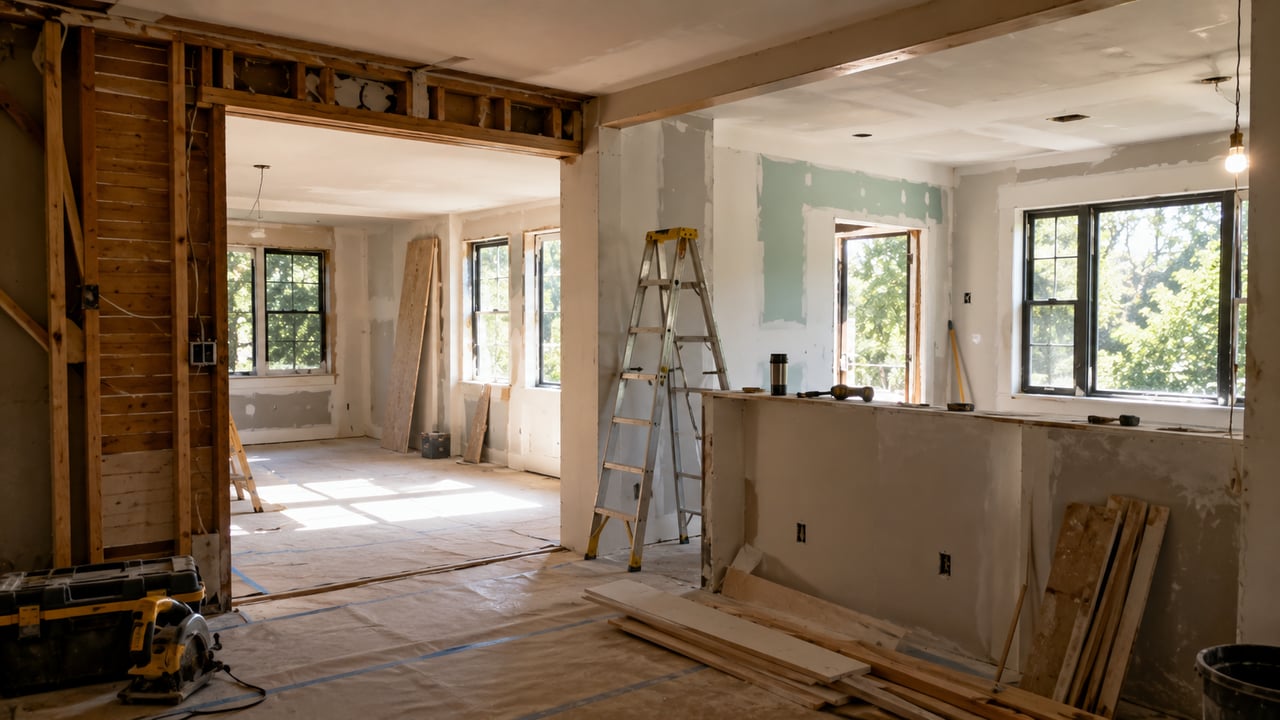
When the home needs primarily cosmetic work, not structural or systems work. Updating kitchens, bathrooms, and flooring is expensive but predictable. Foundation issues, electrical rewiring, or plumbing overhauls are where renovation budgets frequently spiral beyond initial estimates.
When you're planning to stay long-term. Renovation costs amortize better over a longer hold period. A fixer-upper bought with a 3-year exit timeline carries more risk than one bought with a 10-plus year horizon.
When you get a genuinely thorough inspection before committing, ideally with a contractor walkthrough in addition to a standard inspection, so your renovation budget is based on real scope rather than a rough guess.
When It Typically Doesn't Work
When the home needs structural or major systems work. Foundation repairs, full electrical rewiring, or full plumbing replacement can easily run $20,000 to $50,000 or more, and costs here are notoriously difficult to estimate accurately before work begins.
When you're financing renovation with high-interest options like credit cards or personal loans rather than a renovation-specific mortgage product, since the interest cost erodes the savings from the lower purchase price.
When you don't have contingency budget built in. Renovation projects reliably run over both budget and timeline. Without at least 15 to 20 percent contingency built into your renovation budget, unexpected findings can put you in a difficult financial position mid-project.
When your timeline is tight, needing to move in quickly for work, school, or other obligations. Renovation timelines are notoriously unpredictable, and living through construction, or paying for temporary housing during it, adds real cost and stress.
Financing Options Worth Understanding
Renovation loans, like FHA 203(k) loans or conventional renovation mortgages, allow you to finance the purchase price and renovation costs together into a single loan, based on the home's value after renovation rather than its current condition. This is often a smarter financing structure than paying for renovation separately out of pocket or with high-interest debt.
Home equity options become available once you've built some equity, though this typically isn't accessible until after your initial purchase and some paydown, so it's more relevant for a second-phase renovation than the initial purchase itself.
What I Walk Buyers Through Before They Commit
Before making an offer on a fixer-upper, I recommend bringing in a contractor for a walkthrough alongside the standard inspection, not to replace it, but to get a realistic renovation estimate before you're contractually committed.
I also help buyers run the actual comparison: total cost including renovation versus the comparable move-in-ready price in that same neighborhood, so the decision is based on real numbers rather than the appeal of a lower purchase price alone.
The Real Example
A buyer was considering a fixer-upper priced $70,000 below comparable homes in the neighborhood. Initial impression: significant savings.
We brought in a contractor for a walkthrough before making an offer. The estimate came back at $85,000 for necessary updates, kitchen, both bathrooms, flooring throughout, and some electrical panel work.
Once we factored in the full renovation cost, the math no longer favored the fixer-upper over a comparable move-in-ready home, and the buyer chose to pursue a different property instead. Getting that estimate before committing saved them from a decision that looked appealing on paper but didn't hold up under real numbers.
What Most Buyers Get Wrong
They compare the fixer-upper price to the move-in-ready price without factoring in renovation costs, focusing only on the gap that looks attractive at first glance.
They underestimate renovation costs, particularly for anything involving structural, electrical, or plumbing work, where initial estimates frequently run low.
They don't build in contingency budget, leaving no cushion when a renovation project inevitably uncovers something unexpected once work begins.
FAQ: Fixer-Upper Questions
Q: How much should I budget beyond the contractor's initial estimate?
A: A common recommendation is 15 to 20 percent contingency on top of your initial renovation budget, since projects frequently uncover additional work once they begin.
Q: What's the biggest red flag in a fixer-upper?
A: Structural or foundation issues and major systems work, electrical, plumbing, HVAC, tend to be where costs escalate most unpredictably compared to cosmetic updates.
Q: Are renovation loans harder to qualify for than standard mortgages?
A: They involve additional documentation around the renovation scope and contractor estimates, but they're a standard, well-established loan product, not a significantly harder qualification process.
Q: Should I get a contractor walkthrough before or after making an offer?
A: Ideally before, or with your offer structured to include a contractor walkthrough as part of your inspection contingency period, so you have real numbers before you're financially committed.
Q: Is a fixer-upper a good idea for a first-time buyer?
A: It depends on your timeline, budget cushion, and tolerance for the renovation process. It can work well for a patient, well-prepared buyer, and poorly for someone needing to move in quickly with limited financial flexibility.
Q: How long do most renovations actually take?
A: This varies enormously by scope, but it's common for projects to take longer than initial estimates, which is another reason a flexible timeline matters more than people expect going in.
A fixer-upper can be a genuinely smart move or a costly mistake, and the difference usually comes down to running real numbers before you commit, not just seeing an appealing gap on the listing price. I help buyers evaluate that math honestly, including bringing in the right professionals before an offer, not after.
If you're considering a fixer-upper and want a clear-eyed look at whether the numbers actually work, let's talk it through.
(512) 217-3961
[email protected]
— Maria Aguirre
Mi Casa Agency | Keller Williams Lake Travis