The Decision That Comes Down to More Than Style
Buyers often frame this as a style preference, do they like the character of an older home or the clean lines of new construction. But underneath that preference is a set of real financial tradeoffs that matter just as much, sometimes more, than aesthetics.
Here's how to think through the decision honestly.
Upfront Cost
New construction typically carries a price premium compared to a comparable older home in the same area, sometimes significantly, since you're paying for new materials, current design trends, and builder overhead.
Older homes, particularly those needing some updating, often provide more square footage and lot size for the same budget, though this needs to be weighed against renovation costs if the home needs work.
Property Tax Reality
This is one of the most overlooked differences. New construction gets assessed at full market value essentially immediately, while an older home you're purchasing may carry a lower assessed value that hasn't yet caught up to current market pricing, at least until your purchase triggers a reassessment in some counties.
This doesn't mean older homes always have dramatically lower taxes, reassessment does eventually catch most properties up to market value, but the timing and mechanics vary, and it's worth understanding for your specific situation rather than assuming.
Initial Depreciation
New construction often experiences a modest dip in value in the first year or two after purchase, sometimes 3 to 5 percent, similar to how a new car depreciates once driven off the lot. This is because the "new" premium fades once the home is no longer literally the newest inventory in the area, and once it's competing with resale rather than being compared to other new builds.
Older homes with established value in a neighborhood don't experience this same initial dip, since their value is already anchored to established comparable sales rather than a premium new-construction price point.
Maintenance and Systems
New construction generally means new systems, HVAC, roof, water heater, appliances, all under warranty and unlikely to need major repair or replacement for years. This provides genuine peace of mind and predictable costs in the near term.
Older homes carry more uncertainty here. Systems may be nearing the end of their expected lifespan, and even well-maintained older homes eventually need roof replacement, HVAC updates, or plumbing work that a comparable new build won't need for a decade or more.
HOA and Community Fees
Many new construction communities, particularly master-planned developments, come with HOA fees that start relatively low during initial phases and increase as the community builds out and amenities expand. This is worth understanding upfront, since the fee you see at purchase isn't necessarily the fee you'll pay in five years.
Older, established neighborhoods sometimes have no HOA at all, or a long-established HOA with more predictable, stable fee history.
Equity Building Over Time
This is where the two paths diverge most significantly over a longer hold period. Because new construction often experiences that initial depreciation dip, and because you're paying a premium at purchase, the equity building curve tends to start slower.
Older homes, purchased at a price already anchored to established market value rather than a new-construction premium, often show more consistent equity growth from the start, assuming reasonable market conditions and the home is well-maintained.
Over a 10-plus year hold, this difference can be meaningful, though it depends heavily on the specific market, neighborhood trajectory, and how well either property is maintained.
Location Considerations
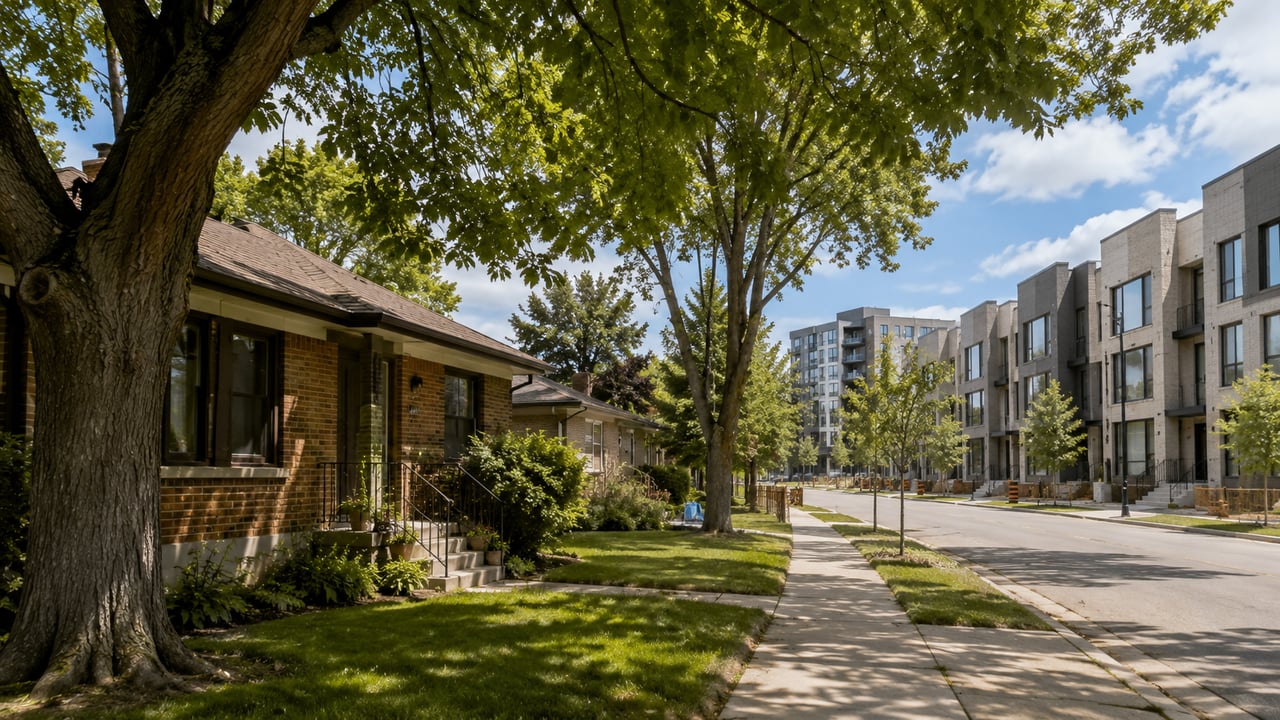
New construction is often located in newer growth corridors, sometimes farther from established job centers and amenities, though this varies significantly by area and is changing as infill new construction becomes more common in some markets.
Older homes are more likely to be in established neighborhoods with mature landscaping, existing infrastructure, and often shorter commutes to central employment areas, depending on the specific location.
Who New Construction Tends to Fit Better
Buyers prioritizing low near-term maintenance risk and predictable costs. Buyers who value modern floor plans, energy efficiency, and current design trends. Buyers less concerned with immediate equity building and more focused on move-in-ready convenience. Buyers comfortable with a newer, sometimes farther-out location in exchange for these benefits.
Who Older Homes Tend to Fit Better
Buyers prioritizing established neighborhood location and shorter commutes. Buyers comfortable taking on some maintenance responsibility and unpredictability in exchange for potentially stronger near-term equity position. Buyers who value character, lot size, or mature landscaping that new construction typically can't offer immediately. Buyers with the cash reserves or renovation budget to handle updates as they come up.
How I Help Buyers Think Through This
Rather than starting with style preference, I walk buyers through their actual priorities: how important is predictable near-term maintenance cost versus long-term equity position, how much does location and commute matter relative to having everything be new, and what's their genuine tolerance for handling repairs and updates as they arise.
This usually clarifies the decision more effectively than simply touring both types of homes and going with whichever "feels" right in the moment, since the financial tradeoffs matter as much as the emotional response to walking through a space.
FAQ: Older Home vs. New Construction
Q: Does new construction always cost more than an older home?
A: Generally yes, for comparable size and location, though this varies by specific market and how much updating an older home needs.
Q: Is it true new construction loses value initially?
A: Often, modestly, in the first year or two, similar to how new construction competes with resale pricing once it's no longer the newest inventory in the area.
Q: Are HOA fees always higher in new construction?
A: Not always higher at purchase, but they frequently increase over time as communities build out, which is worth understanding before committing.
Q: Which is a better long-term investment?
A: This depends heavily on specific market and neighborhood, but older homes in established areas often show more consistent equity growth from the start, given they're not carrying an initial new-construction premium.
Q: Do older homes always need more maintenance?
A: Generally yes, particularly for major systems reaching the end of their typical lifespan, though a well-maintained older home can still offer years of reliability.
Q: Is new construction always in less convenient locations?
A: Often, but not universally. This varies significantly by market and is changing as infill new construction becomes more common in some established areas.
Choosing between an older home and new construction comes down to more than personal style, it's a real financial tradeoff between near-term predictability and long-term equity position. I help buyers think through this honestly based on their actual priorities, not just which option feels more appealing during a tour.
If you're weighing this decision, let's talk through what actually matters most for your specific goals.
(512) 217-3961
[email protected]
— Maria Aguirre
Mi Casa Agency | Keller Williams Lake Travis