The Conversation That Changed Everything
I was sitting across from a young couple, both in their late twenties, both earning solid incomes, both ready to buy their first Austin home.
"What are you looking for?" I asked.
They described their dream: a modern home in South Congress, probably around $500,000. Trendy neighborhood. Hip vibe. Instagram-worthy. Everything they'd imagined.
I asked them a different question: "What would serve your financial future best?"
They looked confused. Those felt like different questions to them.
They were right. They are different questions.
And most first-time buyers never learn to ask the second one.
The Fundamental Difference in Mindset
Your first home and your dream home are not the same thing. They shouldn't be. And conflating them is how first-time buyers make decisions that set back their financial futures by years.
Your Dream Home is emotionally driven. It's the home you've imagined. The neighborhood you love. The style that makes you happy. The home where you can see your family's future.
Emotions are valid. Dreams matter.
But they're not the primary lens through which to evaluate your first purchase.
Your First Home should be strategically driven. It's the vehicle through which you build wealth. It's the down payment on your financial future. It's the asset that, over time, will enable you to eventually buy that dream home from a position of strength.
Most first-time buyers don't understand this distinction. They treat their first home like their forever home. They optimize for happiness instead of wealth-building.
Luxury buyers, by contrast, understand this instinctively. They often buy their first property in a less glamorous neighborhood because the price-to-value ratio is better. They're building equity. They're building wealth. Once they have accumulated substantial equity, then they move to the dream neighborhood.
First-time buyers are often doing it backwards.
The Math of Your First Home Decision
Let me show you what I mean with real numbers.
Scenario 1: Dream Home First
You buy in South Congress (trendy, competitive, expensive) for $500,000.
3% down payment: $15,000
Closing costs: $15,000
Total cash required: $30,000
Your mortgage: $485,000
After 5 years of payments, you've paid down principal by maybe $40,000-50,000.
Your equity: $55,000-65,000
But here's what happened: property appreciation in South Congress was only 2% annually (saturated market, limited room to grow).
Your home is now worth approximately $570,000.
Scenario 2: Strategic First Home
You buy in an emerging neighborhood (less trendy, less competitive, lower price) for $350,000.
Same 3% down: $10,500
Same closing costs: $15,000
Total cash required: $25,500
Your mortgage: $339,500
After 5 years, you've paid down maybe $30,000-40,000 in principal.
Your equity: $40,000-50,000
But this neighborhood appreciates at 4% annually (emerging, growth trajectory).
Your home is now worth approximately $426,000.
Now Let's Compare:
South Congress home: $570,000 value, $65,000 equity
Emerging neighborhood home: $426,000 value, $50,000 equity
South Congress seems ahead, right?
But wait. Let's look at total cash outlay:
South Congress: You've paid $30,000 down + $485,000 in principal reductions = $515,000 out of pocket (roughly)
Emerging neighborhood: You've paid $25,500 down + $339,500 in principal reductions = $365,000 out of pocket
You've spent $150,000 less to build almost as much equity.
Meanwhile, you have $150,000 still in your bank account.
With that $150,000, you can:
- Weather emergencies without stress
- Make additional principal payments
- Invest in other vehicles
- Build wealth faster
And after 5 years in the emerging neighborhood, you can sell that home, take your $50,000 equity, and use it as a down payment on your South Congress dream home—but now you're buying from a position of strength instead of stretching.
This is the difference between wealth-building and consumption.
Why First-Time Buyers Get This Wrong
You've been renting. You've imagined owning. Now that ownership is possible, you want it all immediately.
You want the neighborhood you love. The home that makes you happy. The place where you can finally stop paying someone else's mortgage and start building equity.
All legitimate desires.
But when you conflate "first home" with "dream home," you're making a consumption decision instead of an investment decision.
You're optimizing for happiness today instead of wealth tomorrow.
What Luxury Buyers Understand
A luxury buyer purchasing a $2M home isn't buying their first property in that home. They're buying their 3rd or 4th property.
By property #3 or #4, they've accumulated enough equity to afford the luxury purchase without stretching their finances.
They built that equity by making strategic decisions early. They bought in less glamorous neighborhoods. They focused on price-to-value ratio. They optimized for appreciation.
Then, once they had substantial equity, they upgraded to neighborhoods and homes that made them happy.
They separated "first home" from "dream home" strategically. And it paid off.
First-time buyers should adopt the same mindset.
The Emotional vs. The Practical
Here's the honest truth: your first home probably won't make you perfectly happy.
It might be in a neighborhood that's less trendy than you imagined. It might not have all the features you dreamed about. It might be smaller than your ideal.
That's okay.
Your first home isn't meant to be perfect. It's meant to build wealth.
Once you've built enough equity, you can move to a home that makes you happier. But now you're doing it from a position of financial strength.
You're not stretching. You're not eliminating your safety net. You're not setting back your long-term financial future to satisfy short-term emotional desires.
This is the shift that changes everything.
How to Choose Your Strategic First Home
If you're going to adopt this mindset, here's how to evaluate properties strategically:
1. Price-to-Value Ratio
What are comparable homes selling for in this neighborhood? Is this home priced below market? At market? Above market?
Lower price-to-value ratio = better investment potential.
2. Growth Trajectory
Is this neighborhood appreciating? At what rate? Are new businesses, transit, or infrastructure coming?
Higher growth trajectory = better long-term appreciation.
3. Condition
Will this home require expensive repairs? Is deferred maintenance an issue?
Better condition = fewer surprise costs eating into your equity building.
4. Resale Flexibility
Will this home be easy to sell in 5-7 years? Or are you buying something so niche it has limited buyer appeal?
Better resale flexibility = easier exit when ready to upgrade.
5. Emotional Sustainability
Can you be happy here for 5-7 years while you build equity?
If the answer is "no, I'll resent this home," that's a problem. You need to be comfortable enough to stay long enough to build wealth.
But if the answer is "yes, it's not my dream, but it's solid and I can be here for 5-7 years," then this is strategically sound.
The Timeline That Changes Everything
Here's what a wealth-building real estate timeline looks like:
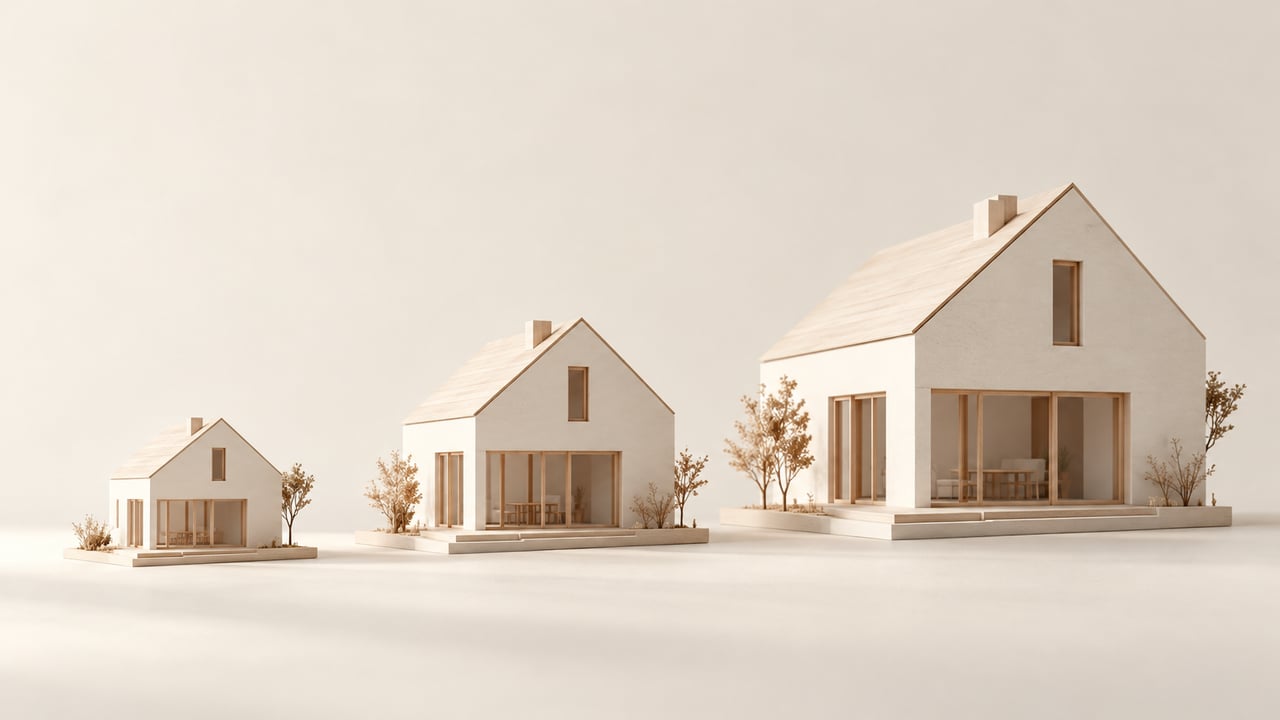
Years 0-5: Strategic First Home
Buy in emerging neighborhood. Focus on price-to-value and appreciation potential. Build $40,000-50,000 equity. Keep it simple.
Years 5-10: Strategic Second Home
Sell first home. Use $50,000 equity + additional savings as down payment on second home in a better neighborhood. Repeat wealth-building process.
Years 10-15: Upgrade to Dream Home
By now you've built substantial equity across two properties. You have flexibility. You can afford your dream neighborhood from a position of strength.
Instead of stretching on your first purchase, you've spent 10-15 years building wealth.
Now you're buying the dream home without sacrificing your financial security.
FAQ: First Home vs. Dream Home
Q: Doesn't buying a less desirable home mean I'll be unhappy?
A: Only if you frame it that way. Frame it as: "I'm strategically building wealth so I can afford my dream home eventually from a position of strength." Different frame, different emotional reality.
Q: What if I find my dream home at a great price?
A: Great price in absolute terms, or great price relative to comparable sales? If it's truly a deal and you can afford it without stretching, take it. But distinguish between "I love this home" and "I love this home AND it's a smart investment."
Q: How long should I stay in my first home?
A: Typically 5-7 years. This gives you time to build meaningful equity before selling. Selling too early means less equity to roll into your next purchase.
Q: What if the market crashes while I own my first home?
A: Then you're grateful you didn't overpay. Strategic purchases protect you in downturns. Emotional purchases expose you. This is another reason strategy matters.
Q: Can I buy my dream home if it's in a good market?
A: You can. But understand the trade-off: you're using capital that could build additional wealth. You're reducing your financial flexibility. Make that choice consciously, not emotionally.
Q: What if my neighborhood appreciates less than I expected?
A: Then you built less equity than hoped. But you also didn't overpay (because you bought strategically). Your loss is smaller than it would have been if you'd bought your dream home at premium price and it appreciated 2%.
The choice between buying strategically for wealth-building and buying emotionally for happiness is one of the most consequential decisions you'll make. I welcome the opportunity to help you evaluate properties through both lenses—what will make you happy and what will build your financial future.
If you're evaluating first home options, let's discuss your strategic priorities alongside your personal preferences.
(512) 217-3961 | [email protected]
— Maria Aguirre Mi Casa Agency | Keller Williams Lake Travis