What Are the Hidden Costs First-Time Home Buyers Face in Austin?
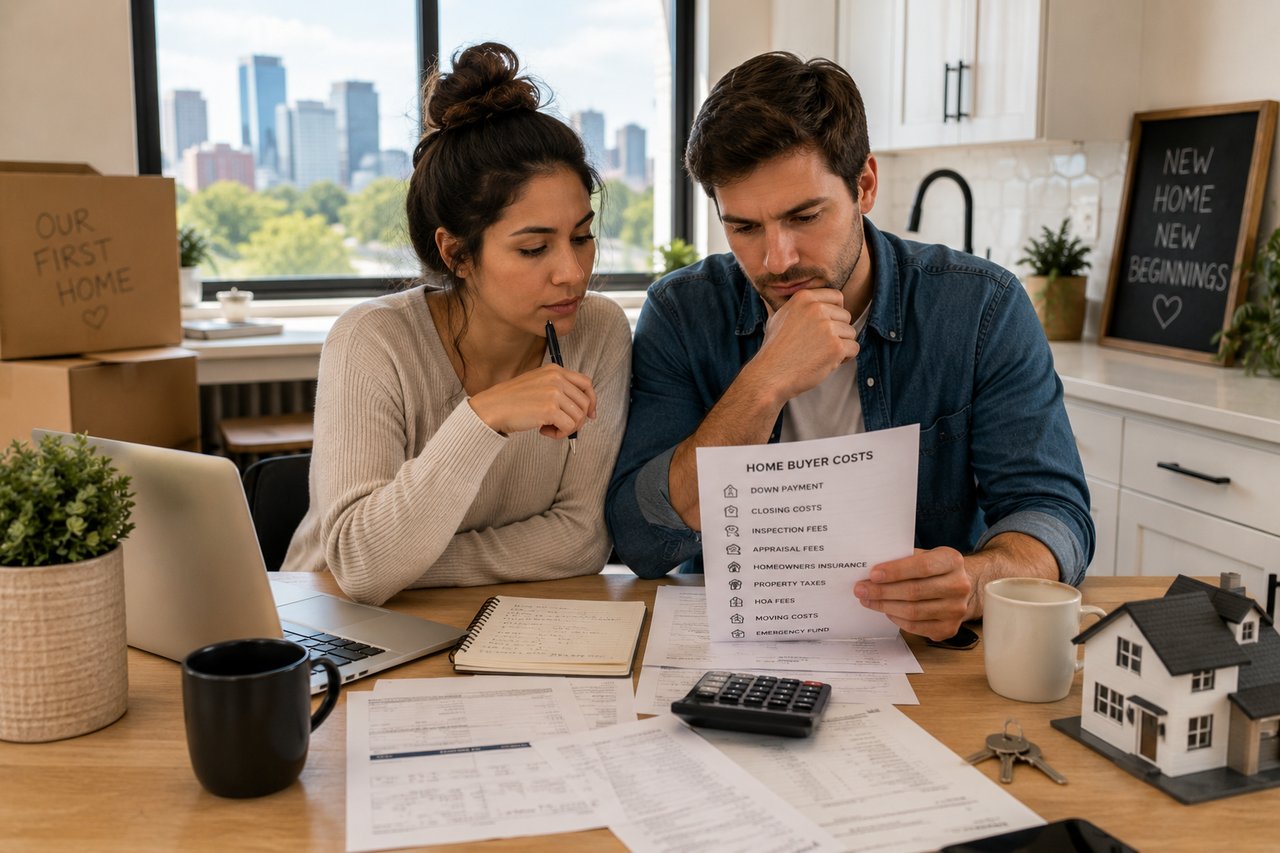
First-time buyers in Austin often budget carefully for the down payment and then encounter a range of additional home buyer costs in Austin that were not part of their original plan. These include closing costs, prepaid expenses, inspection fees, homeowner's insurance, property taxes, and HOA fees where applicable. On a median-priced Austin home, these additional costs can add anywhere from $8,000 to $20,000 or more to the total out-of-pocket amount at closing — separate from the down payment entirely.
By Maria Aguirre | June 25, 2026
The down payment is the number most first-time buyers fixate on. It makes sense — it is the largest single figure, and clearing that threshold feels like the finish line. But understanding the full range of home buyer costs in Austin before you make an offer is what separates buyers who close confidently from those who find themselves scrambling in the final weeks of a transaction.
This post breaks down every major cost category beyond the down payment that Austin first-time buyers should account for — what each one is, roughly what it costs, and when in the process you will be expected to pay it.
Closing Costs: The Biggest Budget Surprise for Austin First-Time Buyers
Closing costs are the fees and expenses paid at the time of closing, separate from the down payment. For buyers in Texas, these typically range from 2–5% of the loan amount. On a $400,000 home with a conventional loan, that is between $8,000 and $20,000 in closing costs alone.
These costs cover a range of services and requirements:
Loan origination fees. Charged by your lender for processing the mortgage. This varies by lender and loan type but is one of the larger line items on your closing disclosure.
Title insurance. In Texas, buyers typically pay for the lender's title insurance policy, which protects the lender against title defects. A separate owner's title policy — which protects you — is negotiable and sometimes covered by the seller depending on market conditions.
Escrow and settlement fees. Paid to the title company or escrow agent managing the closing process.
Recording fees. Charged by the county to record the deed and mortgage documents in the public record.
Prepaid interest. If you close mid-month, you will pay interest on the loan from the closing date through the end of that month.
Your lender is required to provide a Loan Estimate within three business days of your application — this document will itemize expected closing costs so you can plan accordingly. According to the Consumer Financial Protection Bureau, reviewing your Loan Estimate carefully and comparing it against your final Closing Disclosure is one of the most important steps a first-time buyer can take.
Prepaid Expenses and Escrow Reserves
Beyond closing costs, buyers are typically required to prepay certain ongoing expenses at closing and fund an escrow reserve account that your lender holds to cover future payments.
Homeowner's insurance. Most lenders require the first year's premium to be paid in full at closing. In the Austin area, annual homeowner's insurance premiums vary based on the home's age, location, and coverage level — budgeting $1,500–$3,000 annually is a reasonable starting range depending on the property.
Property taxes. Texas has no state income tax, but property tax rates are among the higher in the country. In Travis County, effective property tax rates have historically hovered around 1.8–2.2% of assessed value. On a $400,000 home, that is $7,200–$8,800 per year. At closing, you will typically prepay two to three months of property taxes into your escrow account.
Escrow cushion. Lenders often require an additional two months of both insurance and tax payments as a buffer in the escrow account. This is a one-time upfront cost that stays in the account as a reserve.
Understanding these prepaids as part of your total home buyer costs in Austin helps you avoid being caught off guard at the closing table.
Inspection and Due Diligence Costs
Once your offer is accepted, the due diligence phase begins — and it comes with its own set of costs that are paid out of pocket, typically before closing.
General home inspection. A licensed inspector evaluates the home's structure, systems, and components. In the Austin area, inspection fees generally range from $350–$600 depending on the size and age of the property.
Specialty inspections. Depending on the home and its location, additional inspections may be advisable — foundation inspections, HVAC evaluations, roof assessments, pool inspections, and pest or termite inspections are common. Each carries its own fee, typically $100–$300 per specialty inspection.
Survey. A property survey confirms the legal boundaries of the lot. In Texas, surveys are sometimes carried over from a prior sale, but if one is not available, a new survey typically costs $400–$700.
Appraisal. Required by most lenders, the appraisal confirms the home's market value relative to the loan amount. Appraisal fees in the Austin market typically run $500–$800. This is usually paid upfront or rolled into closing costs depending on the lender.
These costs are non-refundable if you proceed with the purchase — and in most cases, also non-refundable if you walk away. Understanding this is part of budgeting realistically for home buyer costs in Austin.
Ongoing Costs to Factor Into Your Monthly Budget
Closing is not the end of the financial picture. First-time buyers should build these recurring costs into their monthly budget from day one.
HOA fees. Many Austin area communities — particularly in newer developments in Round Rock, Cedar Park, Pflugerville, and planned communities in the Lake Travis corridor — have homeowner's association fees. These can range from $50/month to several hundred dollars monthly depending on the community and amenities. Always confirm HOA fees and review the association's financials before closing.
Utilities. Austin Energy and other utility providers serve different parts of the metro. Utility costs vary significantly based on home size, age, and energy efficiency. Request utility history from the seller as part of your due diligence.
Maintenance reserves. A commonly cited guideline is to budget 1% of the home's value annually for maintenance and repairs. On a $400,000 home, that is $4,000 per year — or roughly $333 per month set aside for the unexpected.
For a broader look at what the buying process involves in this market, [LINK: Austin first-time buyer guide] walks through the full timeline from pre-approval to closing.
What This Means for First-Time Buyers in Austin
Austin's affordability relative to other major Texas metros has improved in some price ranges, but the full cost of homeownership still catches many first-time buyers off guard. Knowing your down payment number is the beginning — not the complete picture.
Buyers shopping in the $300,000–$500,000 range in communities like Pflugerville, Manor, Del Valle, or the eastern Austin corridors should plan for total out-of-pocket costs at closing that are meaningfully higher than the down payment alone. Getting pre-approved early and asking your lender for a detailed Loan Estimate gives you the clearest possible view of what closing will actually cost.
If you are working with down payment assistance programs — which are available to qualifying Texas first-time buyers through the Texas State Affordable Housing Corporation — understanding how those funds interact with closing cost requirements is an important early step. [LINK: Austin first-time buyer resources page] covers programs available in this market.
Frequently Asked Questions About Home Buyer Costs in Austin
How much should a first-time buyer in Austin budget beyond the down payment?
A reasonable planning range is an additional 3–6% of the purchase price to cover closing costs, prepaids, and inspection fees. On a $400,000 home, that means budgeting $12,000–$24,000 on top of the down payment. Your lender's Loan Estimate will give you a more precise figure once you are under application.
Are closing costs negotiable in Texas?
Some components are negotiable — particularly lender fees, and in certain market conditions, sellers may agree to cover a portion of the buyer's closing costs. However, third-party fees like title insurance, appraisals, and recording fees have less flexibility. Your agent can advise on what is reasonable to request based on current market conditions.
What is an escrow account and why do I need one?
An escrow account is held by your lender and used to collect and pay your property taxes and homeowner's insurance on your behalf. Most conventional loans with less than 20% down require escrow. The account is funded at closing with a prepaid reserve and then replenished monthly through your mortgage payment.
Do Texas first-time buyers have access to down payment assistance?
Yes. The Texas State Affordable Housing Corporation and other programs offer down payment and closing cost assistance to qualifying first-time buyers. Income limits, purchase price caps, and eligibility requirements vary by program. Connecting with a lender familiar with these programs early in your search is the most efficient way to understand your options.
When are home buyer costs in Austin due — all at closing?
Most costs are due at closing, but some are paid earlier in the process. Inspection fees are paid directly to the inspector at the time of service, typically during the option period. The appraisal fee is often paid upfront or at closing depending on lender policy. Everything else — closing costs, prepaids, and escrow reserves — is settled on closing day.
Ready to Understand Your Full Buying Budget in Austin?
Knowing your full cost picture before you start shopping is one of the most valuable things you can do as a first-time buyer. If you want to walk through what buying in Austin would actually cost you based on your target price range, let's talk.
Maria Aguirre is a bilingual REALTOR® at Keller Williams Lake Travis with $50M+ in career sales and 250+ families served across the Austin area. Certified CLHMS, GRI, and CIPS. Connect at https://mariaaguirrehomes.com/