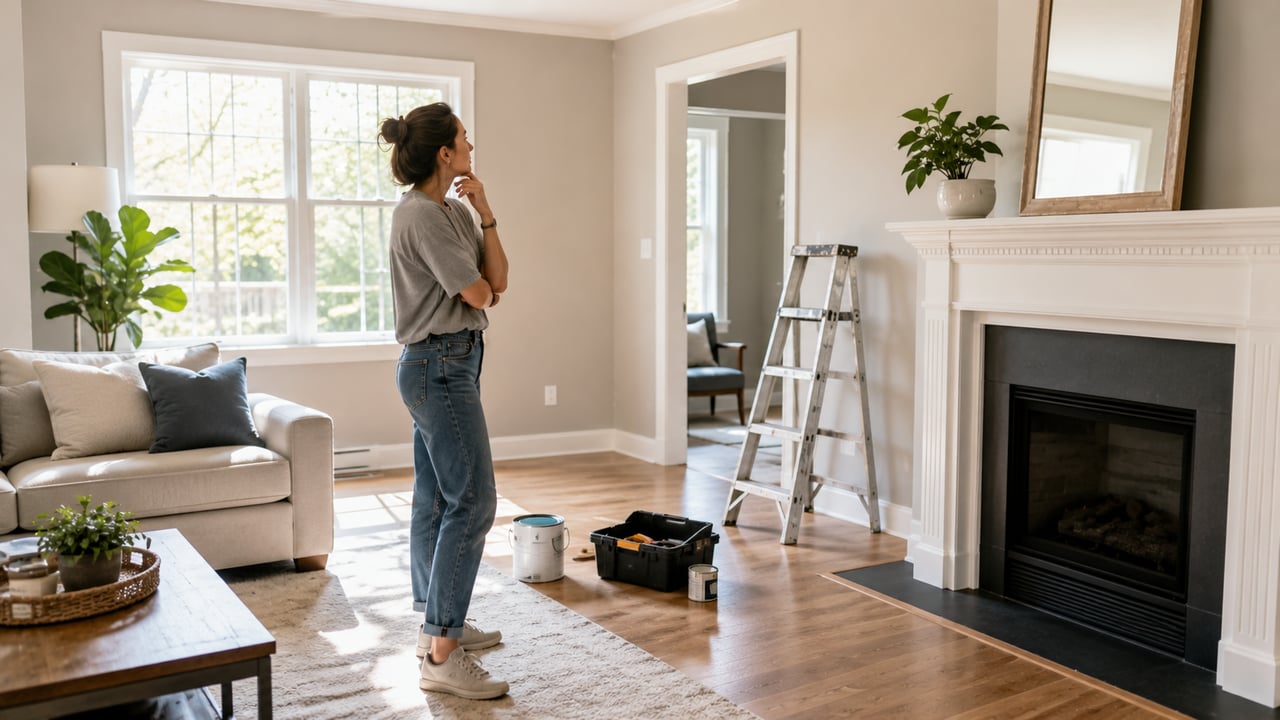
The List Every Seller Starts Making in Their Head
The moment someone decides to sell, they start mentally cataloging everything wrong with their house. The chipped baseboard. The outdated light fixture. The bathroom that's needed a refresh for three years.
Most of that list doesn't need to happen before you list. Some of it absolutely should. Here's how to actually tell the difference.
The Framework: Return on Investment vs. Return on Sale Speed
Before deciding what to fix, it helps to separate repairs into two categories: things that increase your actual sale price, and things that increase how quickly your home sells or how many offers you receive. Some repairs do both. Some do neither, and are purely about avoiding a negotiation headache during inspection.
What's Genuinely Worth Fixing
Anything safety or function related. Electrical issues, plumbing leaks, HVAC problems, and roof damage aren't just cosmetic concerns, they're the items most likely to come up in inspection and become negotiation leverage for the buyer. Fixing these before listing means you control the cost and the contractor, rather than negotiating a credit under pressure during your contingency period.
Fresh paint in neutral tones. This is consistently one of the highest-return repairs available. It's relatively inexpensive, makes the entire home feel newer and cleaner in photos and in person, and helps buyers picture their own belongings in the space rather than yours.
Deep cleaning and decluttering. Not technically a repair, but it functions like one in terms of buyer perception. A clean, uncluttered home consistently shows better in listing photos and in person, and costs little to nothing beyond time and effort.
Obvious, visible issues a buyer would notice immediately. A broken cabinet door, a cracked tile, a hole in a wall. These are the details that make buyers wonder what else might be wrong, even if the actual issue is minor and inexpensive to fix.
Landscaping and curb appeal basics. Trimmed bushes, fresh mulch, a clean walkway. This is the first impression before a buyer even walks through the door, and it's a relatively low-cost way to set the tone for the entire showing.
What You Can Typically Skip
Full kitchen or bathroom remodels. These rarely return their full cost at sale, and buyers who want a specific style often prefer to remodel to their own taste rather than pay a premium for someone else's recent renovation choices.
Major systems that are functioning but older. An HVAC system that's 12 years old but working fine doesn't necessarily need replacement before listing. Buyers understand systems age, and this is more appropriately addressed through pricing or a negotiated credit if it becomes a specific concern during inspection.
Cosmetic updates in rooms that already show well. If a bedroom or living area already looks clean and reasonably current, additional cosmetic spending there often doesn't move the needle much further.
Anything purely based on personal taste rather than genuine dated or damaged condition. Not every buyer will love your specific style choices, but that doesn't mean every choice needs to be undone before selling. Focus on genuinely dated or worn elements, not simply things that aren't to your own taste.
The Repairs Buyers Actually Negotiate Over
Based on what typically comes up during inspection negotiations, the items that most often become sticking points are foundation concerns, roof age or damage, electrical panel issues, plumbing problems, and HVAC systems at or past their expected lifespan.
Addressing these proactively, or at minimum getting a clear understanding of their condition before listing, prevents these from becoming last-minute negotiation surprises that can delay or jeopardize your closing.
The Pre-Listing Inspection Option
Some sellers choose to get their own inspection before listing, rather than waiting for the buyer's inspection to reveal issues. This costs several hundred dollars but gives you control: you can address genuine problems on your own timeline and with your own choice of contractor, rather than negotiating repairs or credits under the pressure of a buyer's contingency deadline.
This isn't necessary for every seller, but it's particularly worth considering for older homes or homes where you're uncertain about the condition of major systems.
How I Help Sellers Prioritize
Before listing, I walk through the home with sellers and help categorize what's actually worth addressing versus what can be left as-is, priced accordingly, or handled through negotiation if it comes up.
I also help sellers understand which items are likely to come up in a buyer's inspection specifically, so there are no surprises that could have been addressed proactively and cost-effectively before listing, rather than reactively during a tense negotiation window.
The Real Example
A seller was preparing to list and had a list of nearly $30,000 in planned updates, kitchen countertops, bathroom vanity replacements, and full interior repainting.
After walking through the home together, we identified that the kitchen and bathrooms already showed reasonably well and weren't likely to be deal-breakers for buyers in that price range. We focused instead on fresh neutral paint throughout, addressing a minor roof repair that would likely come up in inspection anyway, and professional deep cleaning.
Total spend came to roughly $6,500 instead of the originally planned $30,000, and the home sold within 12 days at asking price. The larger renovation spend wouldn't have meaningfully changed the outcome, it would have just delayed listing and reduced their net proceeds.
What Most Sellers Get Wrong
They over-invest in cosmetic remodels that don't return their full cost, assuming bigger updates automatically mean a stronger sale.
They under-address genuine safety or systems issues, hoping they won't come up in inspection, when these are exactly the items most likely to surface and become negotiation leverage.
They confuse personal taste with genuine dated condition, spending money undoing choices that aren't actually a problem for most buyers.
FAQ: Pre-Listing Repair Questions
Q: Should I remodel my kitchen before selling?
A: Generally not a full remodel. Cosmetic refreshes, paint, hardware, minor updates, tend to have better return than full remodels, which rarely recoup their full cost at sale.
Q: Is it worth getting a pre-listing inspection?
A: For older homes or homes with uncertain system conditions, yes. It gives you control over addressing issues on your own terms rather than negotiating under pressure later.
Q: Should I fix an aging roof before listing if it's not currently leaking?
A: This depends on its age and condition. A roof nearing the end of its typical lifespan is a common inspection negotiation point, so understanding its condition beforehand helps you decide whether to address it or price accordingly.
Q: How much should I budget for pre-listing repairs?
A: This varies significantly by home condition, but focusing on safety, function, paint, and cleaning typically costs far less than sellers initially assume, often a fraction of what a full cosmetic renovation would run.
Q: Will buyers negotiate on cosmetic issues that aren't safety-related?
A: Sometimes, but these are generally weaker negotiation points for buyers compared to safety, structural, or major systems issues, which carry more genuine leverage.
Q: Should I fix things myself or hire professionals?
A: For anything safety or systems related, professional work is worth the cost for both quality and liability reasons. For cosmetic items like paint or minor repairs, this depends on your own skill level and time availability.
Knowing what to fix before listing, and what to leave alone, can be the difference between a smooth, profitable sale and an expensive renovation that doesn't actually pay for itself. I walk every seller through this decision honestly, based on what actually affects buyer offers, not just a generic checklist.
If you're preparing to list and want a clear-eyed assessment of what's actually worth fixing, let's walk through your home together.
(512) 217-3961
[email protected]
— Maria Aguirre
Mi Casa Agency | Keller Williams Lake Travis