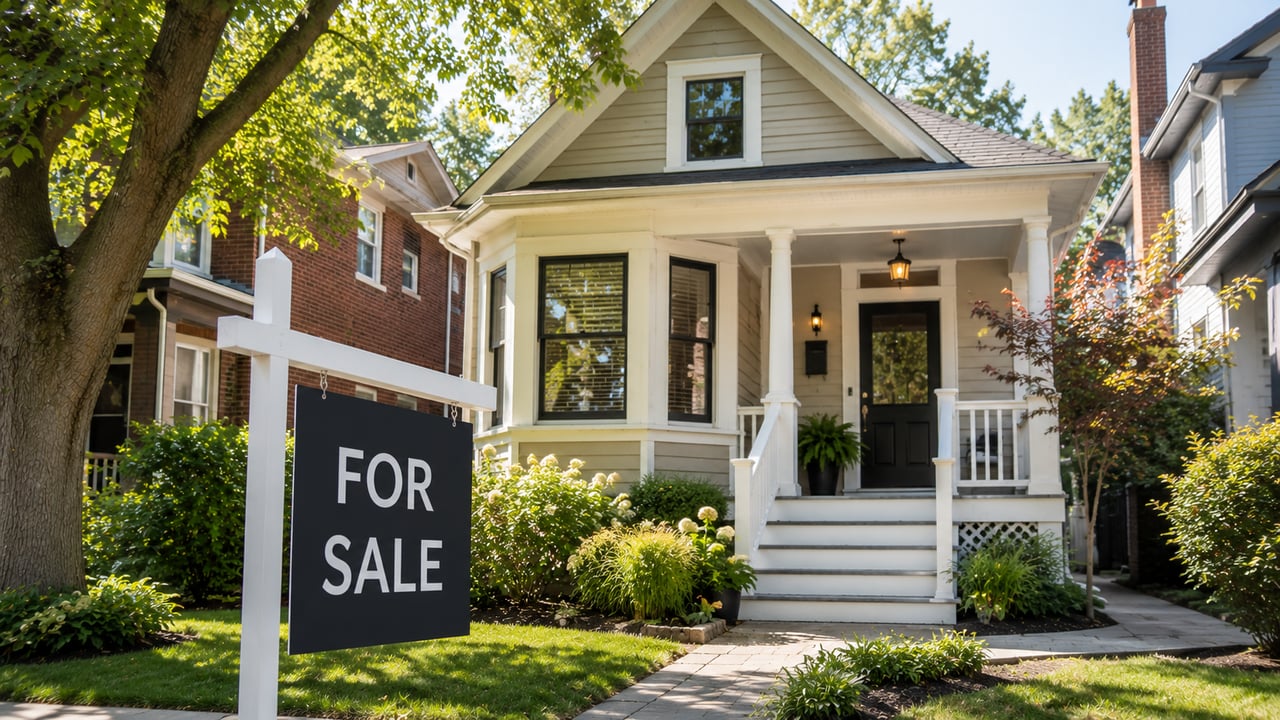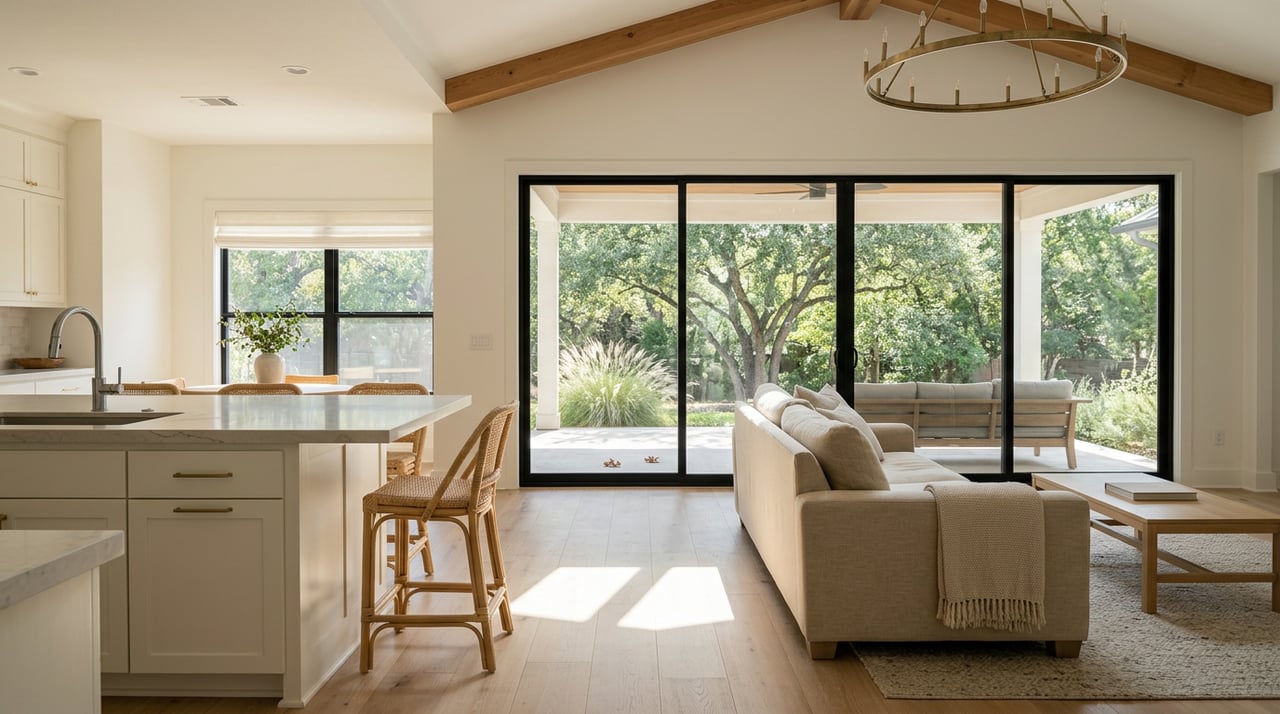
Are you planning to sell your Austin home? There's one financial topic that catches many sellers off guard: capital gains tax. The good news? Most homeowners won't owe a dime. But understanding how it works — and when you might be on the hook — can save you thousands and help you plan your sale strategically.
Whether you're selling a primary residence in Mueller, a Lake Travis luxury estate, or an investment property in East Austin, knowing the tax implications before you list is essential to maximizing your proceeds.
WHAT IS CAPITAL GAINS TAX?
Capital gains tax is the federal tax owed on the profit from selling an asset, including real estate. The gain is calculated by subtracting your cost basis (what you paid for the property plus qualifying expenses and improvements) from your selling price.
For example, if you purchased your home for $400,000 and sell it for $650,000, your capital gain is $250,000. Whether you owe taxes on that gain depends on several factors — most importantly, whether the property was your primary residence.
THE PRIMARY RESIDENCE EXCLUSION: YOUR BIGGEST TAX BREAK
The IRS offers one of the most generous tax exclusions available to homeowners through Section 121 of the tax code. This exclusion allows qualifying sellers to exclude significant capital gains from taxation:
- Single filers: Exclude up to $250,000 in profit
- Married filing jointly: Exclude up to $500,000 in profit
To qualify for this exclusion, you must meet two key requirements:
1. Ownership Test: You must have owned the home for at least 2 of the last 5 years before the sale
2. Use Test: You must have lived in the home as your primary residence for at least 2 of the last 5 years before the sale
These two-year periods don't have to be continuous, and they don't have to overlap. This flexibility allows for some strategic planning, especially if you've temporarily relocated or rented out your home.
Here's a practical example: If you're a married couple who bought your Lake Travis home in 2020 for $500,000 and sell it in 2025 for $900,000, that entire $400,000 profit would be completely tax-free, assuming you met the ownership and residency requirements.
You can use this exclusion repeatedly throughout your lifetime, but not more than once every two years.
WHEN YOU MIGHT OWE CAPITAL GAINS TAX IN AUSTIN
While the primary residence exclusion protects most sellers, there are specific scenarios where Austin homeowners could face capital gains tax liability:
Investment Properties and Second Homes
If the property you're selling wasn't your primary residence, you won't qualify for the capital gains exclusion. This includes rental properties, vacation homes, and investment properties purchased specifically for appreciation.
Austin's strong rental market has attracted significant investor interest over the past decade. If you own rental properties in high-growth areas like East Austin, the Domain, or near the University of Texas, you've likely seen substantial appreciation. When you sell, that entire gain is subject to capital gains tax.
Additionally, if you've claimed depreciation deductions on a rental property, you'll owe depreciation recapture tax at a rate of 25% on the amount depreciated, regardless of your income level.
Selling Before the 2-Year Mark
Timing matters significantly when it comes to capital gains tax. If you sell your home before meeting the 2-year ownership and residency requirements, you typically won't qualify for any exclusion.
If you owned the property for less than one year, you'll pay short-term capital gains tax, which is taxed as ordinary income at your marginal tax rate (10% to 37% depending on your income bracket).
If you owned the property for more than one year but less than two, you'll pay long-term capital gains tax (0%, 15%, or 20% depending on your income), but you won't receive the $250K/$500K exclusion.
Austin's fast-appreciating market can make it tempting to sell quickly and capitalize on rapid growth. However, waiting to meet the 2-year requirement can save you tens of thousands of dollars in taxes.
Gains Exceeding the Exclusion Limits
Austin has been one of the fastest-growing real estate markets in the country. Home values in certain neighborhoods have doubled or even tripled over the past decade.
Areas experiencing exceptional appreciation include:
- East Austin: Gentrification and urban development have driven values up significantly since 2015
- Mueller: This master-planned community has seen consistent year-over-year appreciation
- Tarrytown and West Austin: Established luxury neighborhoods with limited inventory
- Lake Travis: Waterfront properties have experienced dramatic value increases
- South Congress (SoCo): Urban density and lifestyle appeal have pushed condo values higher
If you've owned your home for 10-15 years in any of these areas, it's entirely possible your gains exceed the $250,000 (single) or $500,000 (married) exclusion thresholds. Any profit above these limits is taxable as a long-term capital gain.
Partial Use as a Rental Property
Many Austin homeowners have used their properties as short-term rentals through platforms like Airbnb and VRBO, especially during major events like South by Southwest (SXSW) and Austin City Limits (ACL).
If you used your home as a rental for any portion of your ownership period after 2008, the tax treatment becomes more complex. You may face depreciation recapture tax on the amount of depreciation claimed during rental periods, or a partial exclusion calculation based on the percentage of time used as a primary residence versus rental use.
UNDERSTANDING CAPITAL GAINS TAX RATES
If you do owe capital gains tax, the rate you'll pay depends on two factors: how long you owned the property and your taxable income level.
Long-Term Capital Gains (Property Owned More Than 1 Year)
For the 2024 tax year:
- 0% rate: Single filers with taxable income up to $47,025; married filing jointly up to $94,050
- 15% rate: Single filers with income $47,026–$518,900; married filing jointly $94,051–$583,750
- 20% rate: Single filers with income over $518,900; married filing jointly over $583,750
Additionally, high-income earners (over $200,000 single / $250,000 married) may owe an additional 3.8% Net Investment Income Tax (NIIT) on capital gains.
Short-Term Capital Gains (Property Owned 1 Year or Less)
Short-term gains are taxed as ordinary income at your marginal tax rate, which ranges from 10% to 37% depending on your total income.
This substantial difference is why holding property for at least one year—and ideally two years to qualify for the primary residence exclusion—can dramatically reduce your tax burden.
STRATEGIES TO MINIMIZE CAPITAL GAINS TAX
Accurately Calculate and Maximize Your Cost Basis
Your cost basis isn't simply the purchase price. It includes:
Purchase-Related Costs:
- Original purchase price
- Closing costs (title insurance, legal fees, recording fees, transfer taxes)
- Survey and inspection fees
Capital Improvements (added to basis):
- Room additions and expansions
- Kitchen and bathroom remodels
- New roof, HVAC system, or water heater
- Deck, patio, or structural additions
- Permanent landscape improvements (retaining walls, irrigation systems)
- Electrical or plumbing upgrades
- New windows and doors
Selling Expenses (reduce gain):
- Real estate agent commissions
- Legal fees related to the sale
- Title insurance for the buyer
- Home staging expenses
Regular maintenance and repairs (painting, minor fixes, landscaping upkeep) do NOT increase your cost basis, but major improvements that add value or extend the life of the property do.
Keep detailed records, receipts, and invoices for all qualifying expenses. The higher your cost basis, the lower your taxable gain.
Time Your Sale Strategically
If you're approaching the 2-year ownership mark but haven't quite reached it, the tax savings from waiting could be substantial.
Example: You bought your home 22 months ago and it has appreciated $280,000. If you're single and sell now, you owe capital gains tax on the full amount. If you wait 2 more months to hit the 24-month mark, $250,000 of that gain becomes tax-free, and you only owe tax on $30,000.
At a 15% capital gains rate, waiting those two months saves you $37,500 in taxes.
Consider a 1031 Exchange for Investment Properties
If you're selling a rental property or investment property in Austin, a Section 1031 "like-kind" exchange allows you to defer capital gains tax by reinvesting the proceeds into another qualifying investment property.
Requirements include:
- Both properties must be held for investment or business use (not primary residences)
- You must identify potential replacement properties within 45 days of selling
- You must close on the replacement property within 180 days
- The replacement property must be of equal or greater value
- You must use a qualified intermediary to handle the exchange
This is a powerful wealth-building tool for Austin investors looking to upgrade properties or diversify without triggering immediate tax liability.
Work With Experienced Professionals
Capital gains tax planning is complex, and the stakes are high. A qualified team can save you thousands:
- CPA or Tax Advisor: Calculate exact tax liability, identify deductions, plan multi-year strategies
- Real Estate Attorney: Structure complex transactions, 1031 exchanges
- Experienced Real Estate Agent: Time your listing strategically, maximize sale price
AUSTIN MARKET ADVANTAGES
Texas Has No State Income Tax
One of the biggest advantages of selling property in Texas is the absence of state income tax. Unlike sellers in California, New York, or other high-tax states who face both federal and state capital gains taxes, Texas sellers only deal with federal liability.
This can represent savings of 5-13% compared to selling comparable properties in other states.
REAL-WORLD AUSTIN EXAMPLES
Example 1: Primary Residence – No Tax Owed
Purchase: Mueller home bought in 2019 for $450,000
Sale: Sold in 2025 for $680,000
Filing Status: Married filing jointly
Calculation:
- Sale price: $680,000
- Original cost: $450,000
- Capital improvements: $35,000 (kitchen remodel, new HVAC)
- Adjusted cost basis: $485,000
- Capital gain: $195,000
- Exclusion: $500,000 (married)
- Taxable gain: $0
- Tax owed: $0
Example 2: Primary Residence – Exceeding Exclusion
Purchase: Lake Travis home bought in 2010 for $400,000
Sale: Sold in 2025 for $1,200,000
Filing Status: Married filing jointly
Calculation:
- Sale price: $1,200,000
- Original cost: $400,000
- Capital improvements: $100,000 (addition, dock, landscaping)
- Adjusted cost basis: $500,000
- Capital gain: $700,000
- Exclusion: $500,000 (married)
- Taxable gain: $200,000
- Tax rate: 15% (assuming income bracket)
- Tax owed: $30,000
FREQUENTLY ASKED QUESTIONS
Do I have to pay capital gains tax if I sell my house in Texas?
Most homeowners do not owe capital gains tax when selling their primary residence in Texas. If you're single and your profit is under $250,000, or married filing jointly with profit under $500,000, and you've lived in the home for at least 2 of the last 5 years, your gain is completely tax-free. Texas also has no state income tax, so you only deal with federal taxes.
How long do I need to live in my home to avoid capital gains tax?
You must own and live in the home as your primary residence for at least 2 out of the last 5 years before selling to qualify for the capital gains exclusion. These don't have to be consecutive years, and the ownership and residency periods don't have to overlap.
What counts as a capital improvement for tax purposes?
Capital improvements are permanent additions or upgrades that increase your home's value or extend its useful life. This includes room additions, kitchen/bathroom remodels, new roofing, HVAC systems, decks, permanent landscaping features like retaining walls, and major electrical or plumbing upgrades. Regular maintenance like painting or minor repairs don't count.
Can I avoid capital gains tax on an investment property in Austin?
Investment properties don't qualify for the primary residence exclusion, but you can defer capital gains tax using a 1031 exchange. This allows you to reinvest proceeds into another investment property without immediate tax liability. You must follow strict timelines: identify replacement properties within 45 days and close within 180 days.
What happens if I used my Austin home as an Airbnb rental?
If you rented out your home through Airbnb or VRBO for part of your ownership, it can complicate your tax situation. You may face depreciation recapture tax on claimed depreciation during rental periods, or a reduced exclusion based on "non-qualified use" periods. The impact depends on when and how long you rented it out.
Does selling my home affect my tax bracket?
Capital gains from selling your primary residence (if they exceed the exclusion) are taxed at capital gains rates (0%, 15%, or 20%), not as ordinary income, so they won't push you into a higher ordinary income tax bracket. However, large capital gains can push you into a higher capital gains bracket or trigger the 3.8% Net Investment Income Tax if your total income exceeds certain thresholds.
Can I use the capital gains exclusion more than once?
Yes, you can use the $250,000/$500,000 exclusion multiple times throughout your life, but not more than once every two years. This means you could potentially use it every time you sell a primary residence, as long as you meet the ownership and residency requirements each time.
What if I have to sell before the 2-year mark due to a job relocation?
If you need to sell before meeting the full 2-year requirement due to a job change, health issue, or other unforeseen circumstance, you may qualify for a partial exclusion. For example, if you lived in the home for 12 months (50% of the required 24 months) before relocating for work, you'd get 50% of the full exclusion ($125,000 for single filers, $250,000 for married).
THE BOTTOM LINE
For the majority of Austin homeowners selling their primary residence, capital gains tax won't be a concern. The federal exclusion amounts are generous enough to cover typical appreciation, even in Austin's strong market.
However, understanding the rules, exceptions, and planning strategies ensures you're not caught off guard and that you structure your sale to minimize tax liability legally and effectively.
Whether you're selling a primary residence, investment property, or navigating a complex situation involving rental use or quick appreciation, the right strategy can mean keeping significantly more of your hard-earned equity.
READY TO SELL YOUR AUSTIN HOME?
Selling your home is one of the largest financial transactions you'll make. Getting both the market strategy and tax planning right ensures you maximize your proceeds and minimize stress.
I help Austin sellers navigate not just pricing and marketing, but also the financial and tax strategy behind their sale. Let's discuss your specific situation and create a customized selling plan that aligns with your goals.
Maria Aguirre
Austin Real Estate Expert | Lake Travis Luxury Homes Specialist
Serving Austin, Lake Travis & Surrounding Areas