You've invested in a luxury home in Austin—whether in Tarrytown, Lake Travis, Westlake, or another premium neighborhood. Now you're considering upgrades. Maybe you want to enjoy the improvements yourself, or perhaps you're preparing to sell and want to maximize your return.
But here's the problem: not all luxury upgrades are created equal. Some high-end features deliver exceptional ROI and help your home sell faster at premium prices. Others are expensive personal preferences that add little to no resale value—and some can actually hurt your sale by being too specific to your taste.
After selling luxury Austin properties from $1M to $5M+ for seven years, I know exactly which features today's affluent buyers pay premium for and which expensive upgrades sellers regret investing in.
This guide breaks down the luxury home features that actually increase resale value in Austin's high-end market, what upgrades deliver the best return on investment, and where to avoid wasting money on renovations that won't pay off when you sell.
UNDERSTANDING LUXURY BUYER PRIORITIES IN AUSTIN
Austin's luxury market has distinct characteristics that differ from other high-end markets across the country. What sells in Dallas, Houston, or California luxury markets doesn't always translate to Austin buyer preferences.
Austin luxury buyers—whether relocating executives, tech entrepreneurs, or established local families—prioritize certain features that reflect the city's lifestyle and climate. They want indoor-outdoor living that takes advantage of 300+ days of sunshine. They expect modern technology integration. They value energy efficiency despite luxury price points because Texas energy costs are real, even for wealthy buyers.
Understanding these priorities is the first step in making smart upgrade decisions that will actually pay off at resale.
OUTDOOR LIVING SPACES: THE HIGHEST ROI LUXURY FEATURE
In Austin's climate, outdoor living spaces aren't just nice-to-have amenities—they're essential luxury features that directly impact resale value and selling speed.
The ROI Reality
High-quality outdoor living spaces can add $150,000 to $300,000 in value to luxury Austin homes. They're consistently the number one feature buyers request during showings and the primary selling point in listing descriptions for premium properties.
What Defines a Premium Outdoor Space
A true luxury outdoor living area goes far beyond a basic patio and grill. Today's Austin luxury buyers expect fully integrated outdoor rooms that function as extensions of the interior living space.
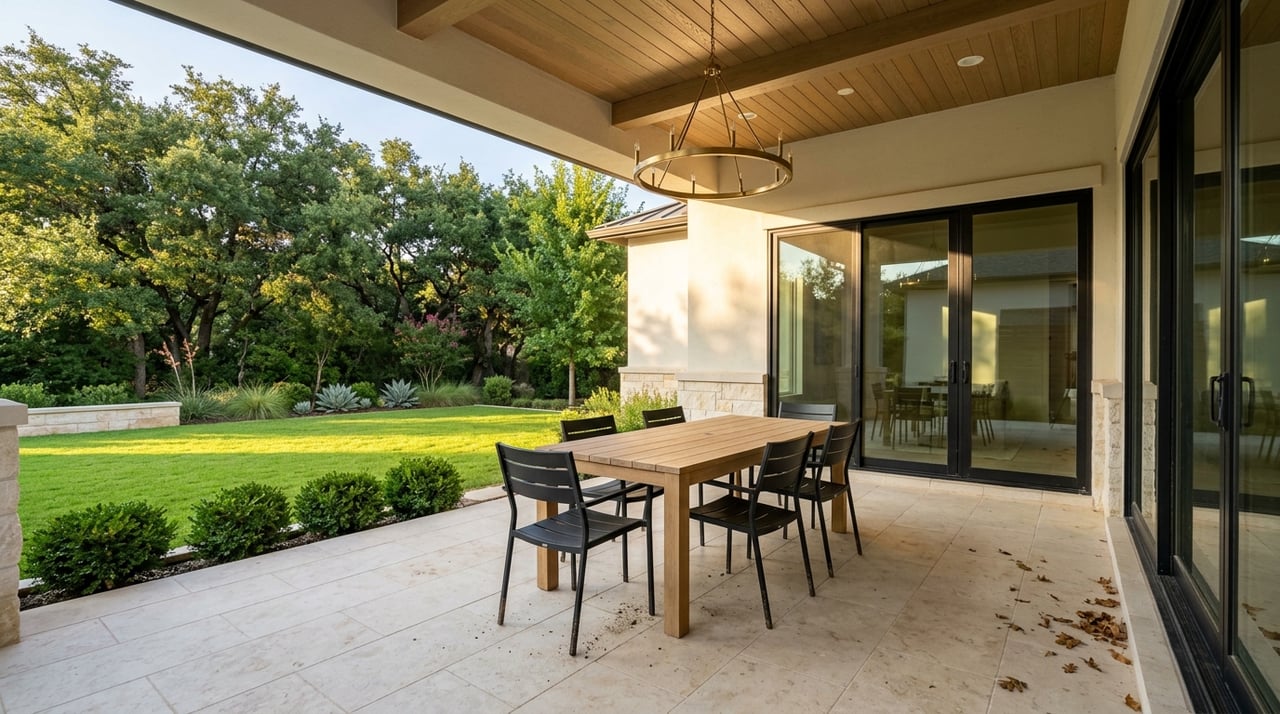
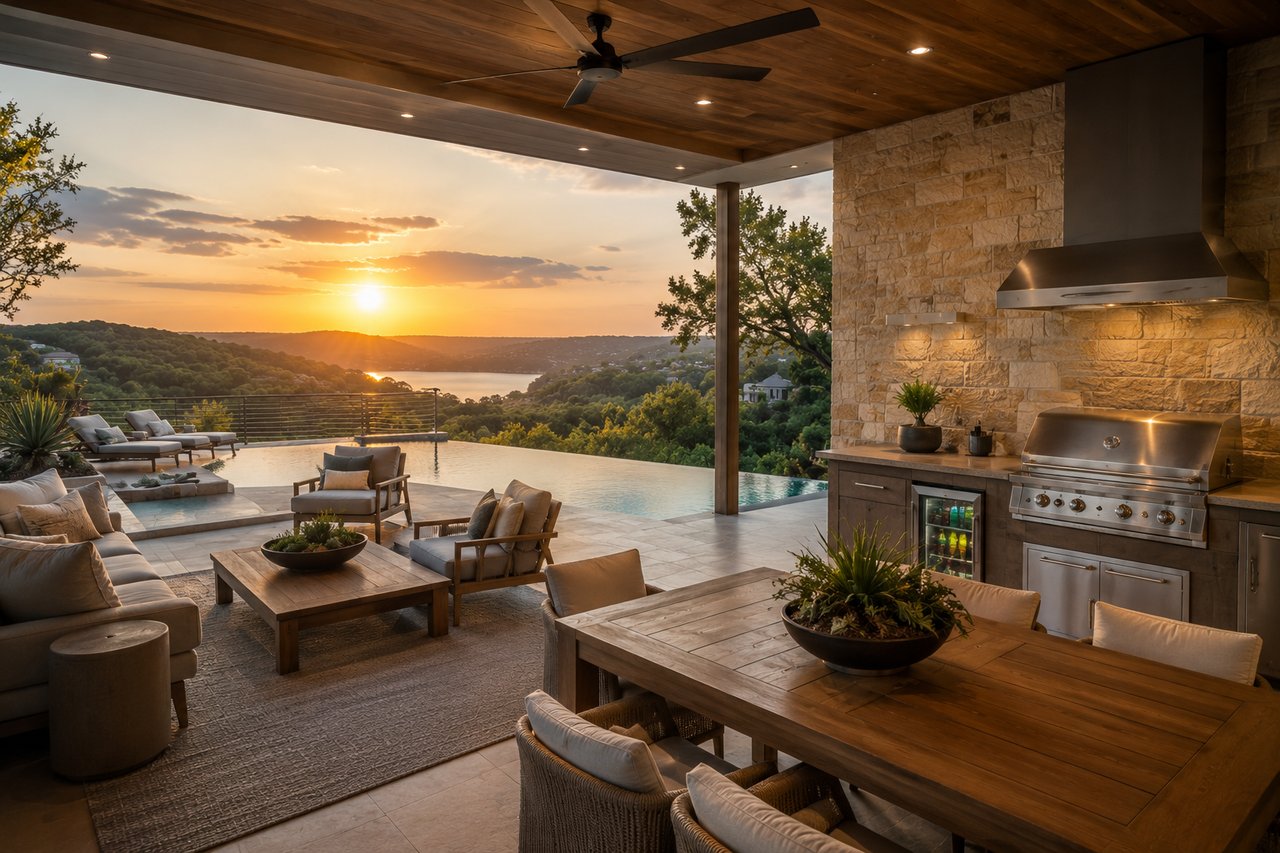
The most valuable outdoor features include covered living areas with comfortable seating arrangements that accommodate entertaining groups of eight to twelve people. These spaces need ceiling fans and often incorporate misting systems for summer comfort, along with outdoor heating elements for winter evenings. Buyers pay premium for spaces that are genuinely usable year-round, not just seasonally.
Outdoor kitchens command significant value when done properly. This means built-in high-end grills from brands like Lynx, Twin Eagles, or Alfresco—not portable units. Buyers expect outdoor refrigeration, storage, and prep space with granite or other natural stone countertops. The most valuable configurations include bars with seating, sinks with hot and cold water, and dedicated pizza ovens or smokers for serious outdoor cooking.
Fire features create ambiance and extend outdoor usability into cooler months. Fire pits with built-in seating areas work beautifully in Hill Country or Lake Travis properties. Linear gas fireplaces integrated into outdoor living walls add modern elegance. The key is making these features permanent architectural elements, not portable additions.
Swimming Pools and Water Features
In Austin's luxury market, pools are expected rather than optional. A luxury home without a pool faces an immediate competitive disadvantage and typically sells for five to ten percent less than comparable properties with pools.
But not all pools add equal value. Basic rectangular pools with standard finishes don't command premiums. Luxury buyers pay for vanishing-edge or infinity pools that create visual drama, especially when paired with views of Hill Country or Lake Travis. Elevated spas that spill into the pool, beach entry areas for young families, and integrated sun shelves with loungers all add value.
Pool equipment matters more than many sellers realize. Variable-speed pumps, automated chemical systems, and salt water chlorination reduce maintenance burden. Heated pools extend swimming season. LED lighting systems and water features like sheer descents or bubblers add visual appeal that photographs beautifully in listings.
Landscaping and Lighting
Professional landscaping with native Texas plants appropriate to the climate adds significant value while reducing maintenance costs. Buyers pay premium for mature trees providing shade and privacy, automatic irrigation systems with smart controllers, and outdoor lighting that highlights architectural features and creates ambiance.
Lighting deserves special attention. Well-designed landscape lighting that illuminates pathways, architectural elements, trees, and outdoor living spaces makes properties show dramatically better during evening showings and creates strong curb appeal. The investment of ten thousand to twenty-five thousand dollars in professional landscape lighting often returns three to five times that amount in perceived value.
What to Avoid in Outdoor Spaces
Highly themed outdoor areas rarely add value. Tiki bars, specific sports themes, or overly personal design elements limit your buyer pool. The same applies to above-ground hot tubs that look dated, artificial turf that luxury buyers generally dislike, and excessive hardscaping that reduces usable lawn space for families with children or pets.
KITCHEN RENOVATIONS: WHERE TO INVEST AND WHERE TO STOP
Kitchens sell homes at every price point, but luxury kitchen renovations require strategic thinking. Over-improving for the neighborhood wastes money, while under-improving compared to competition costs you sale opportunities.
The $100,000 to $150,000 Sweet Spot
In Austin luxury homes, kitchen renovations in the one hundred thousand to one hundred fifty thousand dollar range typically deliver the strongest returns. This budget allows for high-end appliances, quality cabinetry, premium countertops, and professional design without crossing into excessive territory.
Appliances That Matter
Luxury buyers expect high-end appliance packages from brands like Sub-Zero, Wolf, Miele, or Thermador. A forty-eight inch professional-style range with six burners and griddle, built-in refrigeration with panel-ready or stainless finish, and a dedicated wine storage unit are baseline expectations. Double wall ovens add value for serious home cooks, as do warming drawers and speed ovens that combine convection and microwave technology.
The appliance package alone represents thirty-five thousand to seventy-five thousand dollars in a luxury kitchen, but this investment is expected rather than optional. Buyers won't pay premium for luxury homes with builder-grade or mid-tier appliances.
Countertops and Cabinetry
Natural stone countertops remain the gold standard in luxury kitchens. Quartzite has gained significant popularity over granite in recent years for its durability and marble-like aesthetics. True marble works beautifully on islands where food prep doesn't occur but requires careful maintenance education for buyers.
Cabinetry should be custom or high-quality semi-custom with soft-close mechanisms, quality hardware, and finishes that complement the home's overall aesthetic. White or light neutral cabinetry has the broadest appeal, though darker tones work in specific design contexts. Open shelving can add visual interest but shouldn't dominate storage—luxury buyers want ample concealed storage.
Layout and Functionality
Open floor plans connecting kitchen to family and dining areas are essential in Austin luxury homes. Islands should accommodate seating for four to six people, creating casual dining space and social interaction during meal preparation. Separate prep sinks, pot filler faucets at the range, and dedicated beverage stations add functionality that buyers value.
Butler's pantries or oversized walk-in pantries represent one of the highest-value additions in kitchen renovations. These spaces provide storage, additional prep areas, and places to hide everyday clutter when entertaining. Many luxury buyers specifically search for homes with these features.
What Doesn't Add Proportional Value
Ultra-high-end appliances beyond the brands mentioned—like La Cornue ranges costing fifty thousand dollars plus—rarely return their investment. These are personal preferences that new buyers may not share. Similarly, highly specific design choices like bold colored cabinetry, unusual stone patterns, or trendy but polarizing finishes limit your buyer pool.
Commercial-grade equipment beyond residential pro-style ranges often creates concerns about safety, insurance, and practicality for buyers who aren't professional chefs.
PRIMARY SUITE RENOVATIONS: CREATING THE RETREAT
The primary bedroom suite functions as a private retreat in luxury homes, and buyers pay premium for spa-like bathrooms and well-designed bedroom spaces that feel separate from the rest of the home.
Bathroom Features That Command Premium Prices
Luxury primary bathrooms should feel like high-end hotel spas. This means separate vanities with ample counter space and storage, not shared double-sink setups. Each vanity should have dedicated lighting, outlets, and storage—treating the morning routine as individual rather than communal.
Walk-in showers need to be genuinely spacious, measuring at least four feet by six feet minimum. Frameless glass enclosures, multiple shower heads including rain showers and body sprays, and built-in seating or benches add value. Natural stone or large-format tile creates a luxurious aesthetic. Handheld sprayers add functionality.
Freestanding soaking tubs positioned to take advantage of views or architectural features create stunning visual focal points. Many luxury buyers specifically request these, though their actual usage varies. The key is positioning—a beautiful tub poorly placed adds less value than one thoughtfully integrated into the room's design.
Heated floors in primary bathrooms are relatively inexpensive to install during renovation but add significant perceived value. This is especially true in tile bathrooms where floor warmth creates comfort during Texas's brief cold snaps.
Closets and Dressing Areas
Walk-in closets in luxury homes should truly accommodate walking in—not just shuffling sideways. Eight feet by ten feet minimum per person, with his and hers closets being the preference for couples. Custom closet systems with built-in organizational features, quality lighting, islands for folded items, and dedicated shoe storage all add value.
Some luxury buyers prioritize closet space even over bathroom luxury. Don't underestimate the value of truly exceptional closet design, particularly for buyers relocating from areas where closet space is limited.
SMART HOME TECHNOLOGY AND ENERGY EFFICIENCY
Modern luxury increasingly means intelligent luxury. Today's affluent buyers expect technology integration and energy efficiency even at high price points.
Integrated Smart Home Systems
Whole-home automation systems that control lighting, climate, security, entertainment, and window treatments from unified interfaces add substantial value. Systems from Control4, Crestron, or Savant represent the gold standard. These shouldn't be DIY projects—professional installation ensures reliability and ease of use for future owners.
Smart climate control with multiple zones allows different areas of large homes to maintain different temperatures, reducing energy waste while improving comfort. In Texas heat, this is particularly valuable. Smart thermostats that learn patterns and optimize energy usage appeal to environmentally conscious luxury buyers.
Automated lighting systems that create scenes for different times of day or activities add both convenience and ambiance. The ability to control all interior and exterior lighting from a smartphone or wall-mounted touchscreens is increasingly expected rather than impressive.
High-end security systems with cameras, smart locks, and integrated monitoring provide peace of mind. Many luxury buyers specifically want these systems in place, and quality installations add value while inferior DIY setups may be ripped out by new owners.
Energy Efficiency at the Luxury Level
Solar panel systems on luxury homes can generate excellent returns, both in energy savings and resale value. The key is aesthetic integration—roof-mounted panels should be clean and organized, not haphazard. Some luxury communities have architectural restrictions on visible panels, so investigation before installation is essential.
Energy-efficient windows and doors with low-E coatings reduce heat gain in Austin's intense summer sun. For large luxury homes with extensive glass, this dramatically impacts cooling costs. The savings of several hundred dollars monthly in energy bills appeals even to wealthy buyers.
High-efficiency HVAC systems appropriate to home size make substantial difference in operating costs. Many older luxury homes have undersized or outdated systems that struggle with Texas heat. Upgrading to properly sized, high-SEER equipment adds value and reduces potential buyer objections during inspections.
Whole-home generators provide security during power outages, which occur periodically in Texas due to extreme weather. This feature has increased in value significantly following winter storm events and summer grid concerns. Buyers with medical equipment needs or those who work from home particularly value backup power.
HOME OFFICES AND FLEXIBLE SPACES
The pandemic permanently shifted how luxury buyers think about home offices and flexible use spaces. These features now add significant value where they previously were nice-to-have amenities.
Dedicated Office Spaces
A true home office—not a converted bedroom with a desk—means a space with proper soundproofing, quality lighting, built-in shelving or cabinetry, and sufficient outlets and data connections for multiple monitors and equipment. French doors or solid core doors provide privacy during calls and meetings.
Natural light is valuable in office spaces, but positioning matters. Direct afternoon sun creates glare on computer screens, so eastern or northern exposures work better than western. Window treatments that allow light control are essential.
Built-in features like desk surfaces, filing systems, and custom cabinetry add value because they're permanent improvements rather than furniture buyers must source themselves.
Flex Spaces That Adapt
Bonus rooms, game rooms, or media rooms that can serve multiple purposes add value by accommodating different buyer priorities. One family may want a home theater while another needs a home gym or playroom. Spaces designed to accommodate various uses appeal to broader buyer pools than single-purpose rooms.
Casitas or separate guest houses on luxury properties command premium prices. These spaces provide privacy for visitors, home offices separate from main living areas, or potential income through short-term rentals in communities that allow them. The investment in creating standalone guest quarters often returns double or more in resale value.
WHAT DOESN'T ADD VALUE: EXPENSIVE MISTAKES TO AVOID
Understanding what not to invest in is as important as knowing where to spend money. These common luxury upgrades rarely deliver returns.
Over-Personalization
Highly themed rooms—whether dedicated sports memorabilia rooms, elaborate wine cellars designed around specific collecting preferences, or spaces decorated around specific hobbies—limit buyer appeal. The more specific the design to your personal interests, the fewer buyers will appreciate it.
This doesn't mean avoid wine cellars or hobby spaces entirely, but keep them adaptable. A climate-controlled room with wine racking adds value; a room designed exclusively around your personal wine collection with custom labels, specific lighting, and themed décor becomes polarizing.
Excessive Automation
There's a point where smart home technology crosses from impressive to overwhelming. Systems requiring extensive programming, multiple apps, or professional maintenance to operate can actually deter buyers who want convenience, not complexity. Keep automation intuitive and user-friendly.
Trendy Design Choices
Bold wallpaper, accent walls with unusual colors, highly trendy tile patterns, or furniture-quality cabinetry in ultra-modern styles may be gorgeous now but can feel dated quickly. Luxury buyers want timeless elegance, not designs that clearly mark a home as renovated in a specific year.
This doesn't mean avoid all current design trends, but distinguish between lasting quality finishes and passing fads. Neutral sophisticated design has enduring appeal across buyer preferences and time periods.
Pools and Features Beyond Neighborhood Norms
Adding a resort-style pool to a luxury neighborhood where most homes have standard pools can add value. But adding an elaborate water park with multiple slides, splash pads, and complex features to a neighborhood where such amenities are uncommon may not return investment. Buyers in those areas may not have chosen them specifically seeking that lifestyle.
Similarly, tennis courts, sport courts, and elaborate outdoor features should match neighborhood character. If no nearby luxury homes have these amenities, question whether buyers specifically seeking them would choose your area.
AUSTIN-SPECIFIC FEATURES THAT ADD VALUE
Certain features particularly resonate with Austin luxury buyers based on local climate, culture, and lifestyle preferences.
Hill Country Views and Windows
Homes with protected Hill Country views command premiums, and upgrades that maximize these views add value. Floor-to-ceiling windows, disappearing glass walls that open living spaces to outdoor areas, and strategically placed windows that frame views all deliver returns.
Outdoor Living Orientation
Given Austin's climate, homes designed with strong indoor-outdoor connection—large pocket or sliding doors, covered outdoor spaces accessible from main living areas, and seamless material transitions from interior to exterior—align with local lifestyle preferences and add value.
Water Features and Native Landscaping
Austin buyers appreciate water features from simple bubbling urns to elaborate ponds and waterfalls, but these should use native stone and plants that fit Hill Country aesthetics. Xeriscaping with native Texas plants reduces water usage while creating beautiful drought-tolerant landscapes that resonate with environmentally conscious buyers.
Separate Casitas
Properties with guest houses or casitas sell at significant premiums in Austin. These spaces accommodate visiting family, provide home offices separate from main living, or offer potential income. The privacy and flexibility appeal strongly to luxury buyers.
FREQUENTLY ASKED QUESTIONS
What home improvements add the most value in Austin's luxury market?
Outdoor living spaces deliver the highest ROI in Austin luxury homes, often adding $150,000-$300,000 in value for investments of $75,000-$150,000. This includes covered entertaining areas, outdoor kitchens, pools, and professional landscaping. Kitchen renovations in the $100,000-$150,000 range and primary suite bathrooms with spa-like features also deliver strong returns. Smart home integration and energy efficiency upgrades increasingly add value as buyers prioritize both technology and reduced operating costs.
Should I renovate my luxury home before selling?
It depends on your home's condition relative to competition. If your finishes are significantly dated compared to recent luxury sales in your neighborhood, strategic updates deliver returns. However, over-improving beyond neighborhood standards wastes money. The best approach is a pre-listing consultation with a luxury specialist who can identify which updates will actually increase your sale price enough to justify the investment and which won't return their cost.
How much does a luxury kitchen renovation cost in Austin?
Luxury kitchen renovations in Austin typically range from $100,000 to $200,000 depending on size and finishes. This includes high-end appliances ($35,000-$75,000), custom cabinetry, premium countertops, and professional design. Going beyond this range delivers diminishing returns unless the home is exceptionally large or in ultra-luxury neighborhoods where higher standards apply. Always benchmark against recent sales in your specific area.
Do swimming pools add value to luxury homes in Austin?
Yes, pools are expected in Austin luxury homes and their absence typically reduces value by 5-10% compared to comparable properties with pools. However, not all pools add equal value. Standard pools are baseline expectations. Vanishing-edge or infinity pools, elevated spas, beach entries, and resort-style features command premiums. Poor-quality pools or those needing significant repairs can actually hurt value by signaling deferred maintenance.
Is it worth adding solar panels to a luxury home?
Solar panels can add value to luxury homes when installed aesthetically and positioned well. Energy-conscious luxury buyers appreciate reduced operating costs—savings of $200-$400 monthly on large homes adds up significantly. However, panels must be professionally installed and maintained, and some luxury communities have restrictions on visible installations. Consider your specific neighborhood and buyer demographic before investing.
What are the most popular luxury home features in Austin right now?
Current luxury buyer priorities include dedicated home offices with proper soundproofing and built-in features, outdoor living spaces that function year-round, smart home integration with unified control systems, energy-efficient features reducing operating costs, and spa-like primary bathrooms with separate vanities and walk-in showers. Properties with separate guest houses or casitas are particularly desirable and command significant premiums.
How do I know if I'm over-improving my home for the neighborhood?
Compare your planned improvements to recent luxury sales in your specific neighborhood. If you're investing in features no comparable homes have, you may be over-improving. Luxury markets are localized—what works in Westlake may not translate to value in Circle C. Work with a luxury specialist who can provide comparative market analysis showing which features buyers in your specific area actually pay premium for.
Should I use high-end finishes throughout or save money on less-visible areas?
In luxury homes, buyers expect quality throughout. Cutting corners in secondary bathrooms, laundry rooms, or other spaces creates inconsistency that sophisticated buyers notice. However, there's a difference between quality finishes appropriate to space function and matching primary suite luxury everywhere. Guest bathrooms should be well-finished but don't need the same level of luxury as the primary bath. The key is maintaining appropriate quality standards throughout while calibrating finishes to space importance.
THE BOTTOM LINE
Not all luxury home improvements deliver equal returns. The features that add the most value in Austin's high-end market—outdoor living spaces, modern kitchens, spa-like primary suites, and smart home technology—align with local lifestyle priorities and climate realities.
The key is strategic investment. Over-personalization, trendy design choices, and improvements beyond neighborhood norms waste money that won't be recovered at sale. Focus on features that have broad luxury buyer appeal, deliver functional benefits, and align with what comparable homes in your specific neighborhood offer.
Before investing significantly in renovations, understand your local luxury market. What sells quickly at premium prices in Westlake may differ from Lake Travis or Tarrytown. Working with a luxury specialist who knows recent sales data, current buyer preferences, and which improvements actually deliver returns in your specific area prevents expensive mistakes and ensures your renovation dollars add maximum value.
Whether you're planning to sell soon or simply want to ensure your improvements will pay off when you eventually do, strategic renovation decisions protect your investment and position your luxury home competitively in Austin's high-end market.
READY TO MAXIMIZE YOUR LUXURY HOME'S VALUE?
I provide confidential pre-listing consultations for luxury homeowners considering renovations or preparing to sell. I'll analyze your home against recent comparable sales, identify which improvements will deliver returns in your specific neighborhood, and show you exactly what today's luxury buyers are paying premium for.
Let's discuss your home and create a strategic plan to maximize its value in Austin's luxury market.
Maria Aguirre
Austin Real Estate Expert | Lake Travis Luxury Homes Specialist
Luxury Property Specialist | Bilingual (English/Spanish)
Serving Austin, Lake Travis & Surrounding Areas