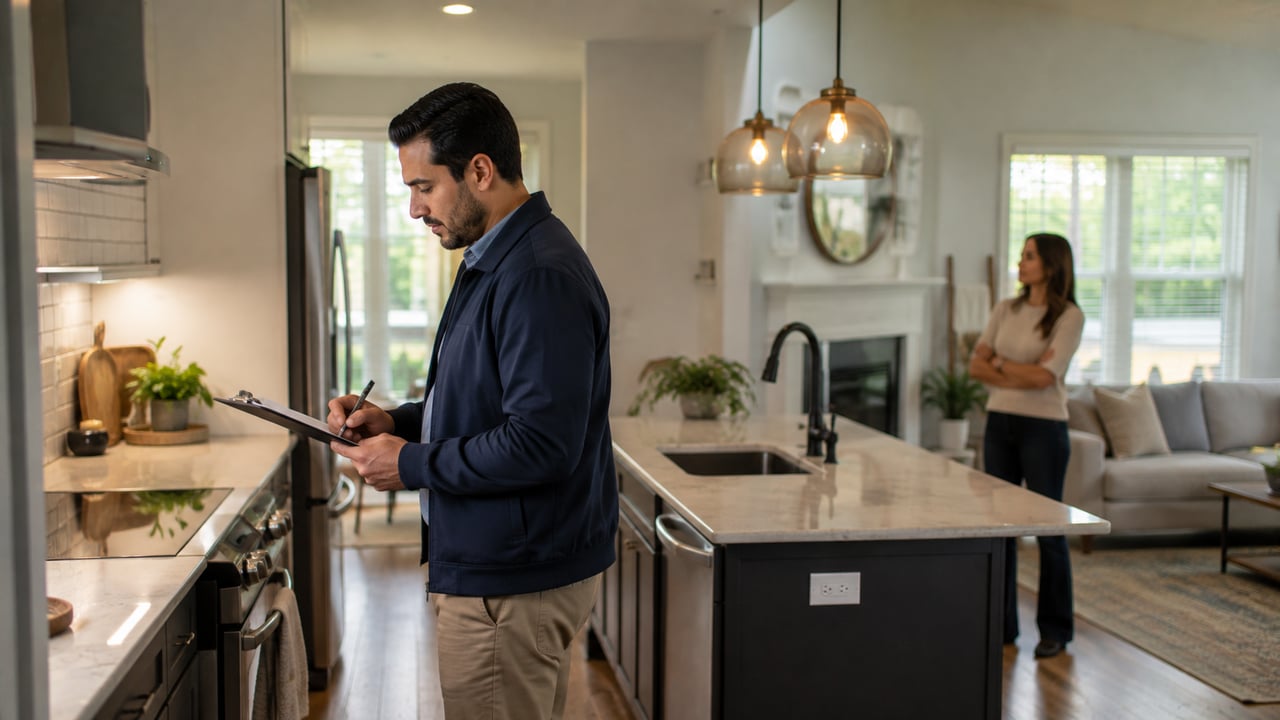
The Moment That Catches Buyers Off Guard
You've negotiated your offer, gotten it accepted, and started feeling settled about the process. Then the appraisal comes back below your agreed purchase price, and suddenly the deal is uncertain again.
This happens more often than buyers expect, and understanding your actual options before it happens changes how you handle it if it does.
Why Appraisals Come in Low
An appraisal is an independent estimate of a home's value, separate from what you and the seller agreed to pay. A few common reasons appraisals come in below the contract price:
The market moved faster than recent comparable sales reflect, especially in a shifting market where pricing data lags actual conditions.
The buyer and seller agreed to a price influenced by competition or emotion that exceeded what comparable sales support.
The appraiser used comparables that don't fully reflect the home's specific upgrades, condition, or unique features.
Limited recent comparable sales in the immediate area, particularly in neighborhoods with fewer transactions or unique properties like waterfront homes.
What an Appraisal Gap Actually Means
If the appraisal comes back at $430,000 but your contract price is $450,000, that $20,000 difference is the appraisal gap. Your lender will only finance based on the appraised value, not the contract price, which means that gap has to be resolved somehow for the deal to move forward as originally structured.
Your Actual Options When This Happens
Option 1: Renegotiate the Price
You can ask the seller to lower the purchase price to match the appraised value. This is often the first approach, particularly if the appraisal gap is relatively small and the seller is motivated to keep the deal together.
Option 2: Split the Difference
Sometimes buyer and seller meet in the middle, with the seller reducing price partially and the buyer covering the remaining gap in cash. This works well when both sides want to preserve the deal without either party absorbing the full difference.
Option 3: Cover the Gap in Cash
You can choose to pay the difference between the appraised value and the purchase price out of pocket, on top of your down payment. This keeps the contract price and the deal intact, but requires having that additional cash available beyond what you'd already budgeted.
Option 4: Challenge the Appraisal
You can request a reconsideration of value, providing your agent's additional comparable sales or documentation the appraiser may have missed. This doesn't always succeed, but it's worth pursuing if you have a genuine case that the appraisal missed relevant data.
Option 5: Walk Away
If you have an appraisal contingency in your contract, you can cancel the deal and get your earnest money back if the seller won't renegotiate and you're unwilling or unable to cover the gap.
Why the Appraisal Contingency Matters So Much
This is the single most important protection in this scenario. Without an appraisal contingency, you're contractually obligated to close at the agreed price regardless of what the appraisal shows, which means you'd need to cover any gap yourself or risk losing your earnest money by backing out.
In competitive situations, some buyers waive this contingency to strengthen their offer. That decision carries real financial risk, and it's worth understanding fully before choosing to go that route, even in a market where it feels necessary to compete.
How I Help Buyers Navigate a Low Appraisal
When an appraisal comes back low, I first review the appraisal report itself to understand which comparables were used and whether there's a legitimate case for reconsideration.
Then I assess the seller's likely motivation. A seller with a home that's been on market 45+ days is often more willing to renegotiate than one who received the deal quickly with strong competing interest.
From there, we typically approach the seller's agent with a clear ask: either meet at the appraised value, split the difference, or work through what makes sense given both parties' positions. Framing this as solving a shared problem rather than a confrontation tends to produce better outcomes than an aggressive ultimatum.
The Real Example
A buyer had a contract at $475,000. Appraisal came back at $455,000, a $20,000 gap.
The home had been on market 38 days, moderate but not extreme motivation. I reviewed the appraisal and found the appraiser had used two comparables that were significantly older sales, not reflecting recent upward movement in that specific pocket of the neighborhood.
We requested a reconsideration of value with three additional recent comparables. The appraiser adjusted the value up to $465,000, narrowing the gap to $10,000. Buyer and seller then split that remaining difference, each covering $5,000, and the deal closed.
Understanding the process and having the right documentation turned what looked like a deal-breaker into a manageable negotiation.
What Most Buyers Get Wrong
They assume a low appraisal automatically kills the deal. It doesn't, in most cases there are multiple paths forward.
They don't request the actual appraisal report and review the comparables used. Sometimes there's a legitimate basis for reconsideration.
They panic and offer to cover the entire gap immediately, without exploring whether the seller would renegotiate first.
They waive appraisal contingencies without fully understanding the financial exposure that creates if the appraisal does come in low.
FAQ: Appraisal Gap Questions
Q: Can I dispute a low appraisal?
A: Yes, through a reconsideration of value request, providing additional comparable sales or documentation. It doesn't always succeed, but it's worth pursuing when you have a legitimate case.
Q: What if the seller won't renegotiate at all?
A: If you have an appraisal contingency, you can walk away and recover your earnest money. Without one, you're generally obligated to either cover the gap or risk losing your deposit.
Q: Should I waive my appraisal contingency to compete for a home?
A: This carries real financial risk. It's worth fully understanding the exposure before deciding, particularly in a market where you may have more negotiating room than you expect.
Q: How often do appraisals actually come in low?
A: It varies by market conditions, more common when prices are moving quickly or in areas with limited recent comparable sales, less common in stable or slower markets.
Q: Who pays for a second appraisal if I want one?
A: Typically the buyer, and lenders don't always accept a second appraisal in place of the original, so this option should be discussed with your lender before pursuing it.
Q: Does a low appraisal affect my loan amount?
A: Yes. Lenders base your loan amount on the appraised value, not the contract price, which is exactly why an appraisal gap creates a financing shortfall that needs to be resolved.
A low appraisal feels like a crisis in the moment, but in most cases there are real paths forward if you understand your options and act with the right information. I walk buyers through this process step by step, from reviewing the appraisal report to negotiating with the seller, so a low appraisal doesn't automatically mean losing the home.
If you're currently navigating an appraisal gap or want to understand your protections before making an offer, let's talk.
(512) 217-3961
[email protected]
— Maria Aguirre
Mi Casa Agency | Keller Williams Lake Travis